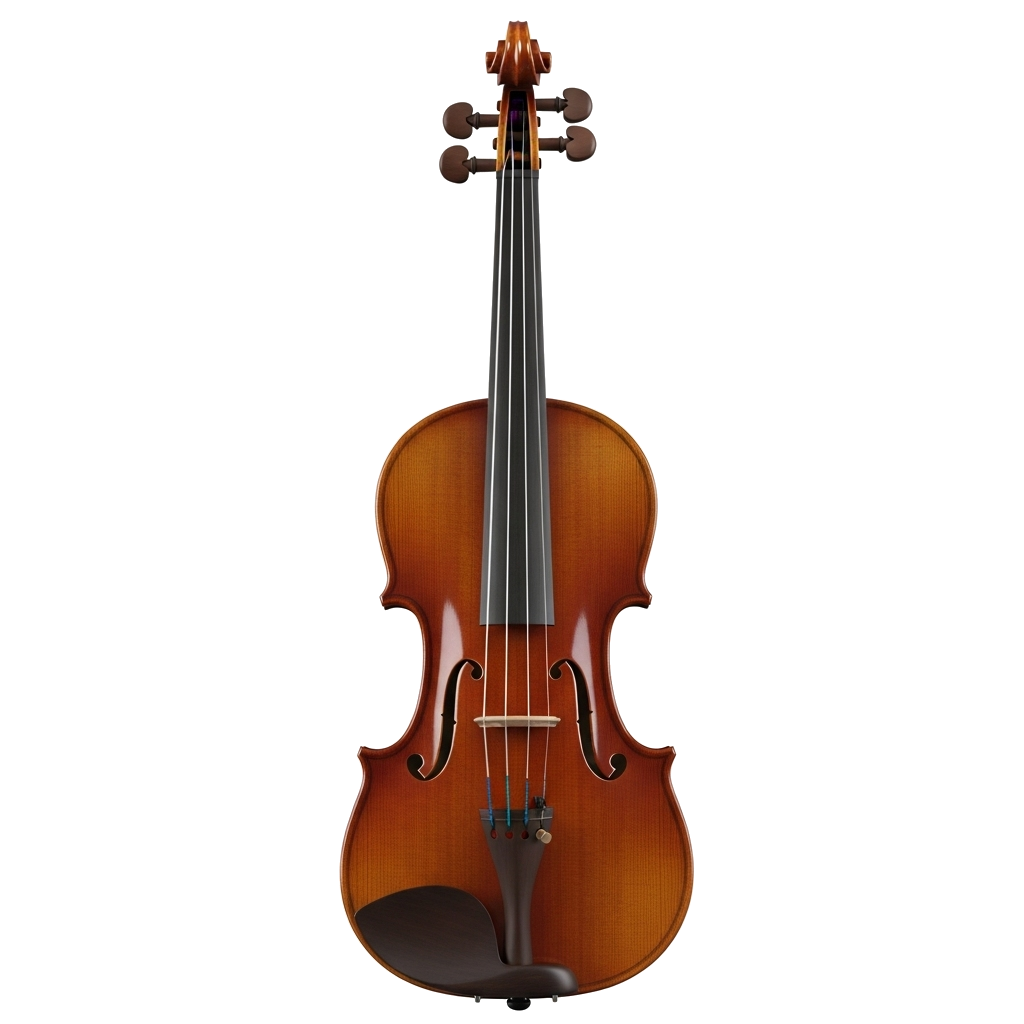
There is deep reverence in Uttam Singh’s voice when he speaks of composers like Madan Mohan, Naushad Ali, C. Ramchandra and S. D. Burman. His reminiscences about them go back to the beginning of his career when the recordist, music director and arranger, known for films such as Dil to Pagal Hai (1997), Gadar: Ek Prem Katha (2001) and Pinjar (2003), started out at the age of 14 as a violinist, playing in the ensembles of these accomplished composers. This perhaps explains why, instead of directly approaching singers to present the works of Naushad and Mohan at Bandish 2024, the NCPA reached out to Singh to curate a musical experience. The result is a concert with Singh’s arrangements comprising a live orchestra of over 50 musicians and five singers who will be performing the choicest tunes of both maestros onstage. Speaking about navigating their vast oeuvre, he notes, “Most of Madanji’s compositions have been sung by Lata Mangeshkar and Naushadji’s most memorable songs are in the voice of Mohammed Rafi. I thought this will be an interesting combination to explore.” Mohan created a unique idiom of a combination of ghazals and soulful melodious compositions in film music and Naushad effortlessly fused the worlds of classical and folk music to offer unforgettable film albums, many of which went on to have silver jubilee editions.
King of melody
Legend has it that Madan Mohan showed musical leanings when he was only two years old. His family resided in Baghdad in British-occupied Iraq and while growing up, he spent hours listening to gramophone records. He was known to dexterously pick out any record his father demanded from a pile of hundreds even before he developed any reading or writing proficiency. His family moved to pre-partition Punjab after Iraqi independence following which his father, Rai Bahadur Chunilal, moved to Bombay and set up Bombay Talkies with Himanshu Rai and Devika Rani. Mohan was keen on joining the film industry but was enlisted, on the insistence of his father, in military school and later the army. Still, he kept the embers of music alive by organising programmes for his fellow soldiers.
After the end of the Second World War, he joined All India Radio (AIR) Lucknow where he interacted with several musical personalities including Begum Akhtar, Ali Akbar Khan, Vilayat Khan and Roshan Ara Begum. He composed and orchestrated a number of programmes for national radio, but films remained his true calling and he quit AIR to join the Hindi film industry. Despite his father’s established production company, Mohan received no support from him because he had given up his job against his father’s wishes. It took him several years of struggle to find his footing as a composer for Hindi films. Following the mild reception of Aankhen (1950), Madhosh (1951), Ashiana (1952) and Bhai-Bhai (1956), Mohan found success with Dekh Kabira Roya (1957). He became the undisputed king of compositions inspired by the ghazal form after the release of Adalat (1958) which featured timeless classics like ‘Jana Tha Humse Door’, ‘Yun Hasraton ke Daag’ and ‘Unko Yeh Shikaayat Hai’.
Ever the military man, many collaborators including Singh remember the staunch disciplinarian that Mohan was in the recording studio. Once, recalls Singh, while recording the song, ‘Har Taraf Ab Yehi Afsaane Hain’ from the film Hindustan Ki Kasam (1973), he was unhappy with the music arrangement and lashed out at his assistant. The entire studio comprising over 40 musicians fell silent. At that moment, Singh dared to play a short piece on the violin. Still responding in anger, Mohan demanded to know what he had played and if he could play it again. Singh’s violin solo became the centrepiece of the musical arrangement of the song. Mohan’s method of composing involved creating the outline of the tune within the first few minutes followed by the arrangements in the next half hour. He once said, “In a film where three minutes is all the time given to a song, the foremost requirement is that the song should be capable of capturing the interest of the listeners in the short period and sustaining it in the years to follow.”
Master of the classical
Growing up in Lucknow, Naushad Ali was surrounded by classical and folk music, poetry, language and tehzeeb. His obsession with music, which began when he was 10, was met with much disapproval from his father who was convinced that the profession of a musician was not a respectable one. Naushad confessed to receiving taleem on the sly from his music teachers, Yusuf Ali saab and Babban saab in Lucknow. When he was 17, his father asked him to choose between his home and his music. In an interview with Prasar Bharati, he said, “Toh maine kaha ‘ghar aapko mubarak ho’, aur maine ghar chhod diya.” (“So, I wished him well and I left my home.”)
He chose to join a local theatre company, travelling all over the country with it. When the company returned to Lucknow, Naushad decided to try his luck in the movies and moved to Bombay in 1937. He initially stayed with an acquaintance from Lucknow and after spending a few nights sleeping on the pavement of Broadway theatre in Dadar, managed to find a job as an assistant to music director Jhande Khan. Later, under the stewardship of composer Khemchand Prakash, Naushad found steady employment as an assistant and a chance to allow his music to flourish.
With Prem Nagar (1940), he became an independent composer and gradually made his mark on the Hindi film music scene. He tasted unprecedented success with Rattan (1944), an album that garnered record sales and allowed him to increase his fees to Rs. 25,000 per film. His understanding of Hindustani classical music was profound, and he spent a lot of time researching the cultural background of a film before composing music for it. Among his most notable scores are Baiju Bawra (1952), Mother India (1957), Gunga Jumna (1961) and his magnum opus, Mughal-e-Azam (1960). Having observed the courtly music traditions of Lucknow, he endeavoured to bring the same quality of classical music to the masses in his films. He said in an interview, “Classical music has never been the art of [the] masses. It flourished in the glamorous courts of rajas, maharajas and nawabs. The common people, who had no access to the great courts, were never offered the opportunity of listening to classical music and therefore could not acquire an ear for it. Hindi film music gave them ample scope to listen to and appreciate classical music.”
In 1972, Mohammed Shafi, Naushad’s music assistant, brought in a young man into the studios since the composer’s health was feeble and he was unable to continue working. That young man was Uttam Singh, who worked as a music arranger in the studio for 35 years, writing, composing and creating background scores for films. In an interview for this article, he recalled the maestro’s composition style. “For Naushad saab, everything had to be big: car, house and music. If I asked him for a certain number of musicians for an arrangement, he would often say, ‘Itne kyun? Zyada lo.’ [‘Why so few? Use more musicians.’] He would say, ‘Get 100 musicians if you need, never compromise on the sound.’ There is an anecdote about him from the ’60s that for one pizzicato section (plucking sound of a stringed instrument) he had invited about 40 musicians. For the title track of the television show, The Sword of Tipu Sultan, we had called in 90 musicians and recorded the background track for 20 episodes in three days.”
A musical soirée
For the tribute concert at the NCPA, Singh has chosen eight to ten songs by each composer. Mohan’s tracks include hits such as ‘Dil Dhoondta Hai’ from Mausam, ‘Betaab Dil ki Tamannaa’ from Hanste Zakhm, ‘Teri Aankhon ke Sivaa’ from Chirag, ‘Naina Barse Rimjhim Rimjhim’ and of course, the eternal ‘Lag Jaa Gale’, both from Woh Kaun Thi? From Naushad’s oeuvre, he has picked melodies including, ‘Madhuban Mein Radhika Nache Re’ from Kohinoor, ‘Aaj Purani Raahon Se’ from Aadmi, ‘O Door ke Musafir’ from Uran Khatola, ‘Suhani Raat Dhal Chuki’ from Dulari and the iconic ‘Pyaar Kiya Toh Darna Kya’ from Mughal-e-Azam.
The singers who will be performing these songs include Vibhavari Apte Joshi, Hrishikesh Ranade, Anwesshaa, Smita Adhikary and Rajesh Panwar. For a number of songs, Singh has changed the arrangements and introductions while retaining the flavour of the original. “Wherever I felt there was room for change, I’ve done it but for the most part we have kept them intact. With such popular songs, one has to defer to the original composition otherwise it takes the fun out of listening to them,” he says. Certainly, in the able hands of an accomplished musician who has worked with both Naushad and Madan Mohan, these compositions will only be enhanced onstage.
--
Box:
Our Supporter
In conversation with Aloka Majumdar, MD, Global Head of Philanthropy and Head of Sustainability – India, HSBC
HSBC has been supporting the NCPA since 2015. How do you see this support evolving in 2024?
Our association with the NCPA over the last nine years reflects the true spirit of partnership. The NCPA is one of the country’s leading organisations working towards preserving our rich culture and heritage. When we first discussed skill development as one of the key pillars of HSBC’s community initiatives, the NCPA highlighted an urgent need for conserving Indian art forms. It started with supporting skill development for the youth and budding artistes in Indian classical music—vocal and instrumental—and classical dance forms. As the partnership evolved, it became clear that there was also a need to train these very talented young artistes in financial planning, an area where HSBC brought in its expertise. Over the years, the programme expanded to include many more young artistes.
From 2024 onwards, as the partnership grows in strength, the initiative is making much-needed strides to include artistes from the LGBTQIA community from low-income households in the Umang series for promising dancers. In the coming days, we eagerly look forward to seeing the impact these steps have made in empowering communities through the arts.
HSBC’s support to the preservation of cultural heritage ranges from encouraging young talent to celebrating eminent artistes. Could you share with us the thought behind this broad-based association?
Our association with the NCPA aims to preserve and propagate the vast repertoire of traditional compositions and other music and dance forms at all levels of artistry. A unique initiative named ‘Promising Artistes Series’ supports emerging artistes by providing a performance platform. This initiative encourages collaboration and mutual learning, as young artistes share the stage with specialists, fostering unique opportunities for observation and artistic synergy. The culmination of this effort comes through by way of the Bandish festival, a platform that is dedicated to presenting high-calibre artistes, showcasing works of renowned composers throughout the ages to audiences and young artistes.
Recommended Articles