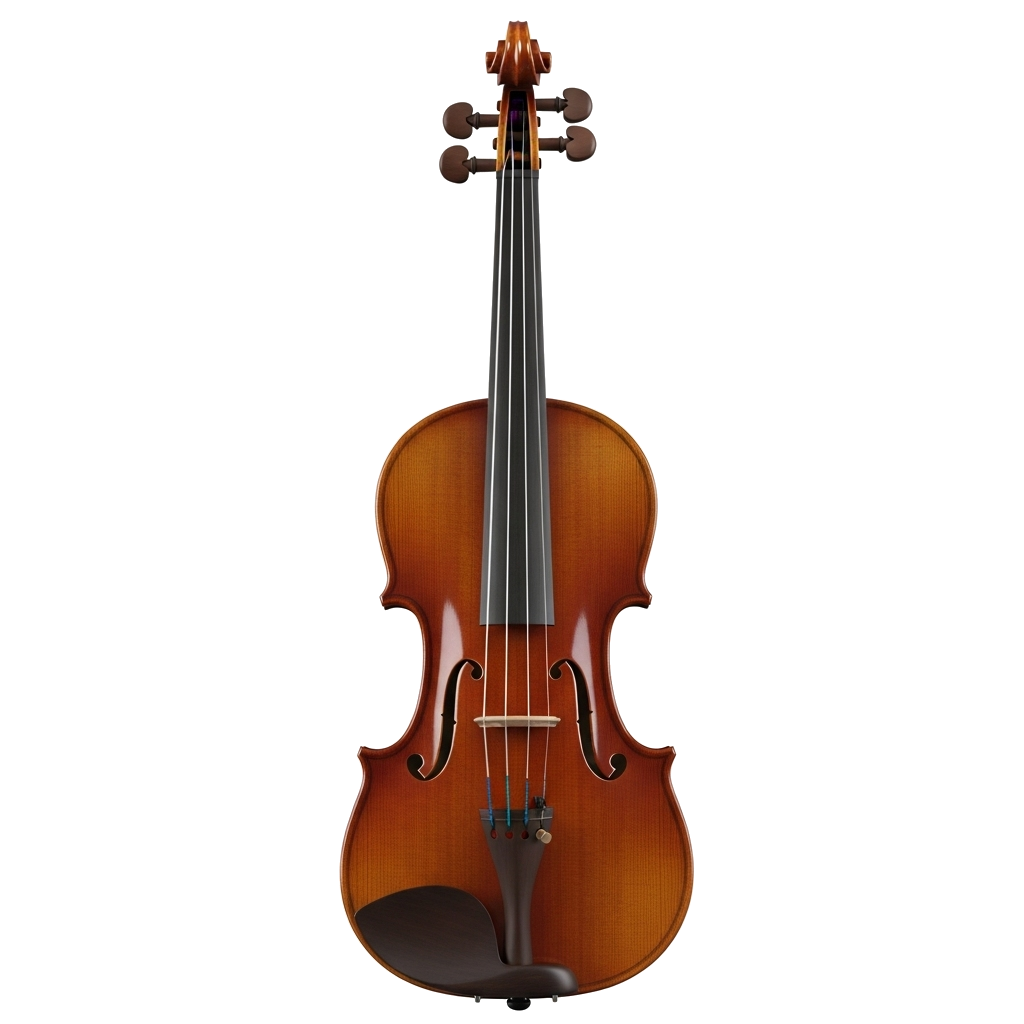
Venetian traveller, writer and physician Niccolao Manucci refers once more to the ‘violin’ in his masterly work on Mughal India. This time he writes about Agra and the humiliating conditions in which an old Shah Jahan spent his last years (1657 to ’66) as a prisoner of his son, Emperor Aurangazeb: “One day while a number of us were present and conversing, he (Shahjahan) sent him (l’tibar Khan) two violins he used, asking for them to be repaired and sent inside again as quickly as possible. The eunuch did not trouble himself about having them repaired; then three days afterwards Shahjahan sent to inquire whether they were mended. At this the eunuch flew into a rage, and, with a vinegary face, sent them off to be repaired. Thus it was only after eight days that they were returned.”
Were these ‘violins’ sarangis or kamanchas? When did sarangi players actually migrate to the cities and settle down as professional musicians? To answer these questions, we will have to go back in time and try to understand what was happening in the field of music during this period.
Although Abu’l Fazl describes the sarangi, names of sarangi players have been omitted from the list of prominent musicians of Akbar’s court. Nor does he mention them as accompanists of female singers and dancers (kanchanis) who frequented his court. Instead, he informs us that these enchanting ladies were usually accompanied by the rabab, pakhawaj and tala (a pair of small cymbals). The kanchanis often figure in the paintings from Akbar’s reign, but nowhere have we been able to recognise a sarangi player. On rare occasions we can distinguish a ghichak player as part of the chamber orchestra, and it is known that at least two such musicians were employed at Akbar’s court. Like his grandfather, Babur, the Emperor was presumably more in favour of Persian than Indian instruments.
When the English traveller Peter Mundy writes about the ‘dauncinge wenches’ and public women (manganis) of Agra in 1632, he does not forget to mention their musicians. He writes, “One that playes on a Tabor or little Drumme [daf]. An old woman which doth only singe and clapp her hands keeping a kinde of tyme. A fellow beating on both sides of a Drumme [pakhawaj or duhuf J ... A woman Clappinge two things like Sawcers of brasse [tala], keeping tyme also.”
No mention is made of any stringed instrument and it is possible that this adventurous Englishman visited dancing girls who belonged to the lower strata of society. On the other hand, if we take Mundy at his word, it is likely that sarangi players had not yet penetrated the quarters where these women entertained their guests. Yet we have seen that Zafar Khan also talks about Agra at the time of Shah Jahan and makes a convincing reference to the sarangi, although it is not clear in which context it was used.
It is known that Shah Jahan was not only a lover of female beauty but, like his illustrious ancestors, a genuine admirer of the fine arts and a noted instrumentalist himself. Manucci writes: “...his usual diversion was to listen to various instruments, to verses and poetry; and he was very fond of musicians...” Faquirullah completes the picture when he says: “At the time when Akbarabad (Agra) became the capital (of the Pathans and Mughals) the melody makers of the time assembled there from all corners of the world. Even the number of ustads was such that had not been seen anywhere else at any time. Most of these hailed from Gwaliar ... In spite of this (also because of all this) the language of the country called Hindustan has gained in elegance ten-fold. In khayal the compositions in this composite language have been based on the topic of love and lovemaking.”
The attitude of the Mughal nobility to music was apparently so favourable that musicians, presumably including sarangi players, migrated in large numbers to Agra and Delhi to try their luck.
Whereas the majority of instrumentalists serving at Akbar’s court were of Persian descent, at the time of Shah Jahan the reverse was true. Most of the instrumentalists described in the Ragadarpan played indigenous instruments such as bin, sarangi and pakhawaj, and no mention is made of ghichak players. Obviously, Persian fiddlers were slowly losing the battle with their native rivals, the sarangi players, and soon the ghichak would almost completely disappear from the Indian music scene. Hindustani music, on the whole, seems to have experienced a phase of innovation, renaissance and above all ‘indianisation’. The sarangi, however, was still in a transitional stage, shifting from rural to urban society. Its role in classical music was not yet clearly defined.
The most dramatic development that took place in music in 17th-century Delhi was perhaps the rise of khayal, which “... is sung in two lines in desi language,” the spoken language of the people. With these matter-of-fact words, Faquirullah demonstrates conclusively that this vocal genre had already found its admirers among the urban elite. He adds that khayal singers preferred the accompaniment of an improved rabab which, besides its traditional six gut strings, had another six or twelve strings of copper or iron. Paintings from the period reveal the same. A large, sophisticated rabab often figured as the main instrument of a small ensemble, and only in the next century would the sarangi gradually take its place. It is questionable, therefore, whether singers specialising in khayal were accompanied by sarangi players at the time of Shah Jahan.
Gradually, khayal rose in prominence. “Khayal composition of the new type,” writes A. Halim, “started during the reign of Bahadur Shah ... Niamat Khan, son of Narmul Khan, who assumed the pen name of Sadarang, composed under royal patronage khayals, dhrupads and horis … with the assistance of Niazi Qawwal and Lala Bangali before he entered the service of Muhammad Shah (1718-48). During the reign of Shah as well, he composed a large number of such songs and set them to tune. It must be remembered that Shah himself was an expert musician and his poetic name in his songs was ‘Sadarangila’ (the ever-gay).
If we believe what vocalists tell us, Sadarang and Adarang (Firuz Khan) composed numerous khayals which they taught to their disciples, mainly women singers who propagated this ‘feminine’ genre during the 18th century. Fortunately, we do not have to rely on the oral tradition alone. From an eye-witness account in Muraqqa-e-Dehli (1739), we get a good idea of how music flourished in Delhi, just after the city had been invaded and sacked by Nadir Shah, the ruler of Persia. The author, Dargah Quli Khan Bahadur, gives a vivid description of over 50 musicians, dancers and actors, many of whom served at the court of Muhammad Shah. The foremost among them was Niamat Khan Binkar. Dargah Quli Khan writes: “In Hindustan the presence of Niamat Khan is a blessing from heaven (niamat). In the art of creating music and songs, his work is incomparable. Famous courtesans boast of their association with him, and he is a master of presenting delicate khayals through music. He is a capable man; he has written works on various subjects in several different languages. But at this time, as music master, he is the leader of all the musicians of Delhi, and he is so proud that except for the Badshah, he does not concede to anybody’s musical request ... His singing in various ragas and raginis has an effect no less than that of magic, and what an amazing skill Niamat Khan has obtained in his bin playing ... It can be claimed that never in the world was there born such a magician of a binkar, nor is there any hope of one ever being born. When he begins to play the bin, the notes of the instrument cast magic spells, and the assembly goes into a strange state; people begin to flutter like fish out of water.”
The famous ustad had many disciples, of whom Qasim Ali and Pannabai were rated as the best. His brother “has an instrument of three strings which is counted among the wonders of music...” Was he perhaps Khusrau Khan, whom the oral tradition names as the inventor of the Indian sitar?
Dargah Quli Khan also describes a number of vocalists who were noted for singing khayal, but he does not waste words connecting this genre to Niamat Khan or his disciples. Was the khayal raga he talks about an innovation of Niamat Khan? Was it dhrupad that incorporated elements of contemporary khayal, and became later known as Sadarang khayal? According to lnayat Khan ‘Rasikh’ (1734-35), Niamat Khan was also a great dhrupad, khayal and tarana singer, who composed khayals with a high degree of perfection, and D. C. Vedi has often explained and demonstrated that there is little difference between ‘classical’ khayals composed by Sadarang and old dhrupad compositions.
It is hardly surprising that the author of Muraqqa-e-Dehli makes no mention of ‘Miyan Sarang’ as the ‘inventor’ of the sarangi. But he does describe Ghulam Mohammad, a renowned sarangi maestro, who was known far and wide. The author writes: “He is a master of melody and has specialised in playing sad and serious ragas with deep feeling. Not a single musician can play sarangi like him, so profound is his training. His fingernails move gently and effortlessly along the sarangi strings. He casts magic on every musical sitting he attends. All musicians and listeners of Delhi agree that he has no equal. Everybody respects him; he is a very modest and unpretentious man who likes everyone.”
Recommended Articles