When Dr. N. Rajam first heard Omkarnath Thakur’s voice, she was no more than 12 years old. “A friend invited me to listen to some newly acquired gramophone records at her place. She played them one after the other for me and I was completely spellbound,” she recalls, adding that it was his celestial and sublime music that entranced her.
She lived in Madras then and this was also her first exposure to Hindustani music. “Little did I know that I would be learning from him in the future,” she says over a phone call ahead of Nad Ninad: From the Archives, a guided listening session on the artistry of Omkarnath Thakur.
Born in 1897, in a village in the then princely state of Baroda, Thakur’s childhood was spent in abject poverty. His father embraced sanyasa—a practice marked by renunciation of material desires and abandonment of material responsibilities—while Thakur was still a child. His mother brought up the children alone with much difficulty. After a move to the neighbouring city of Bharuch, Thakur, who was barely six years old, worked hard to contribute to the family income.
It was at this time that his fortune witnessed a great reversal. His involvement in local theatre and interest in singing led philanthropist Seth Shahpurji Doongaji to notice him and sponsor his training by the Gwalior gharana exponent Vishnu Digambar Paluskar at the Gandharv Mahavidyalaya in Bombay.
The making of a musicologist
Under Paluskar’s wing, a young Thakur mastered vocal techniques and the pakhawaj. Circumstances prevented him from getting much of a formal school education, however, Thakur spent a large part of his life as both a devoted student and then an educationist. Paluskar’s pioneering institute had broken away from the tradition of music being an intergenerational discipline among families and made learning music accessible while also according a more dignified status to the pursuit among the middle classes. Following in his guru’s footsteps, Thakur became principal of the Lahore branch of the Mahavidyalaya and eventually returned to Bharuch to start his own music school.
He went on to become the first principal of the music department of the Banaras Hindu University (BHU) where he further encouraged learning music as a formal discipline. He designed an extensive curriculum and brought musicology and ragas together in a series of textbooks titled Sangitanjali. Several noted musicians trained at the BHU under his guidance, including Rajam. At the listening session at the NCPA, which has been organised around his 127th birth anniversary, Rajam will recount stories of her interactions with Thakur, whose tutelage she has referred to as “a great boon” to honing her technique which is hailed for its seamless adaptability to different forms of Hindustani music. The session will be aided by some of Thakur’s favourite compositions that are part of the NCPA archives. This collection was donated to the organisation by industrialist and connoisseur of music, Babubhai Raja.
“I started learning the violin at the age of three. By the time I was 15, I was well-versed in Carnatic music. I was fortunate enough to get the opportunity to accompany Bharat Ratna M.S. Subbulakshmi in a series of concerts. My higher education provided with a golden opportunity to get introduced to Hindustani music. I took it up as a subject and appeared for my intermediate exams at the BHU,” says Rajam who comes from an illustrious family of musicians.
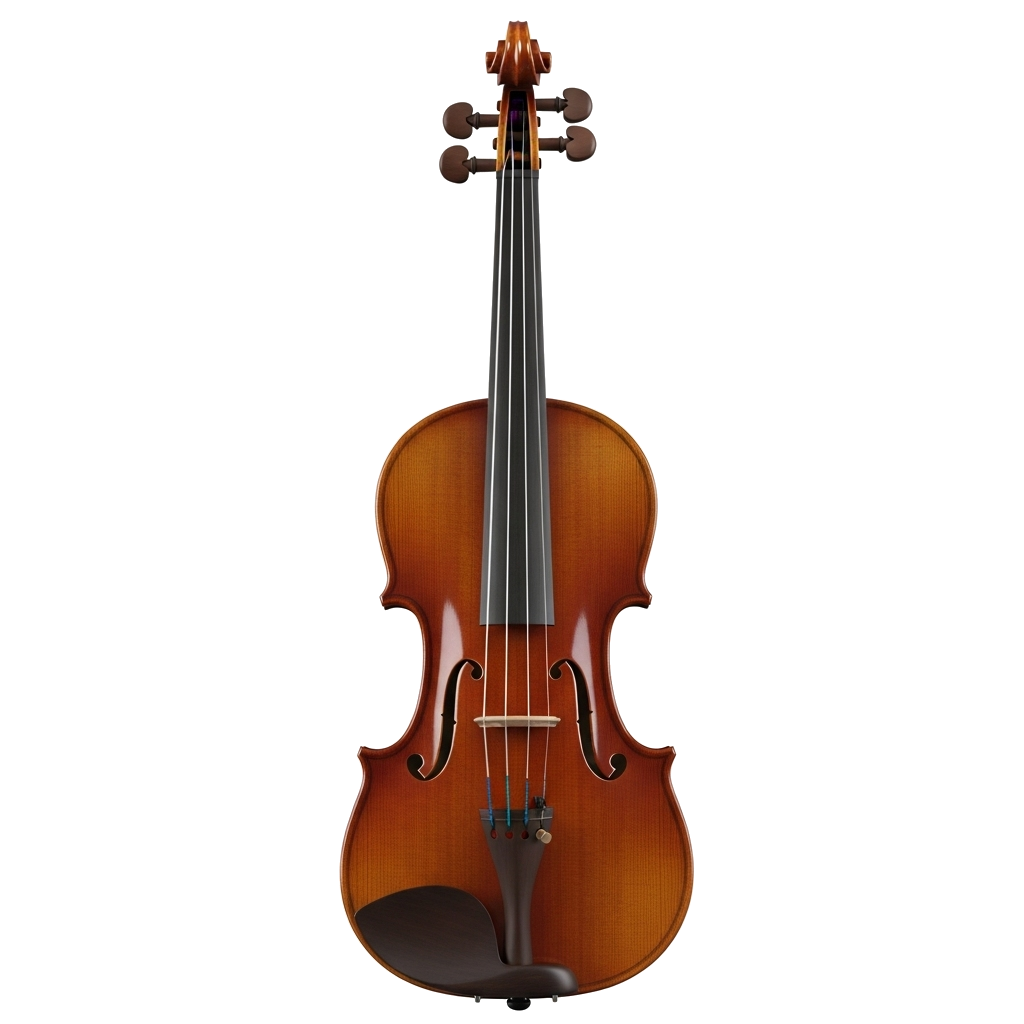
The tale of Thakur accepting Rajam as his disciple is one she believes is most enchanting when shared in person, accompanied by the melodies of her violin. She does tell us that she will cover aspects of how, a vocalist, trained her as a violinist. The listening sessions will include demonstrations by Rajam. “I will be playing the violin. Words can never do justice when the subject is music,” she says.
Of many firsts
Thakur, hailed by the likes of Mahatma Gandhi, Jawaharlal Nehru and Prithviraj Kapoor, was a rare talent and an early proponent of Indian classical music. He was lauded, even by his critics, for his range, volume, dramatic flair and extensive knowledge of shastriya sangeet. His stage presence, in fine clothes and long hair, was riveting. Thakur’s voice was regarded by many as unforgettable. He was invited to Florence, Italy, to attend the International Music Conference and became one of the earliest Indian artistes to tour Europe. While in Rome, he was the guest of Amanullah Khan, the exiled king of Afghanistan, on whose recommendation he spent an evening with Mussolini, discussing the spiritual and historical aspects of Indian music. In 1955, he became the first recipient of the Padma Shri for distinguished service in the arts, which, so far, had been awarded for literature, science, civil service, etc.
Thakur played an active part in the Indian freedom struggle. Legend has it that Mahatma Gandhi once said, “Pandit Omkarnathji can achieve through a single song of his, what I cannot achieve through several speeches.” It is telling then that it was Thakur’s voice, singing ‘Vande Mataram’ in Raga Darbari, that a newly independent India heard on All India Radio on 15th August 1947. Rajam assures us that the audience at Nad Ninad will get the opportunity to listen to this well-known composition. “Recordings featuring Ragas Darbari Kanada, Adana in khayal form and the bhajan ‘Maiya Main Nahin Makhan Khayo’ will be some of the other compositions that will be part of the session,” she tells us.
“Panditji’s unique and highly individualistic raga elaboration in khayal presentation—vilambit and madhyalaya, his unique control over volume variation, kaku prayog (voice modulation), the exactitude of pitch throughout, ornamentations and decorations characteristic of his musical renditions, exhaustive and leisurely development and progression of the raga will be highlighted with recorded excerpts from his concerts,” she adds.
Besides his scholarly interest in music, Thakur was also known for his evocative use of abhinaya which made his performance both an auditory and visual delight. He used a combination of voice modulation, hand gestures, facial expressions and sartorial choices to achieve a dramatic effect. He believed that ragas had emotional personalities of their own, and his interpretations displayed that. This emotional depth was palpable in his practice of all forms of Hindustani music.
The upcoming Nad Ninad session will introduce music enthusiasts to the treasures of Omkarnath Thakur’s multifaceted artistry in the language he valued most, that of music.
--
Box:
A veritable treasure
One of the chief objectives of the NCPA has been to maintain the continuity of the great masters of Indian classical and folk music, dance and drama and to record and preserve the finest performances in these arts which were handed down through oral tradition over generations.
The library’s listening room currently contains 6,115 tapes, 1,168 cassettes, and over 1,980 CDs covering many styles of music and featuring several collector’s items.
The Indian music archives feature exclusive recordings by musical greats including Begum Akhtar, Bismillah Khan, Vilayat Khan, Ali Akbar Khan, Girija Devi, Shobha Gurtu, T. N. Krishnan, Lalgudi Jayaraman and a host of other icons. There is also an extensive collection of 78 rpm records featuring the music of master musicians such as Bal Gandharva, Zohra Bai, Janaki Bai, Malka Jan, Gauhar Jan, Pyara Saheb, Roshanara Begum among others. A valuable collection of natya sangeet, lavni, bhavgeet, bhajans, abhang and comic songs is also part of the archives.
Most of these recordings have now been digitised for the convenience of listeners.
Other music recordings range from tribal to avant-garde, including the New World Anthology of American Music; Music Canada; a UNESCO collection of ethnic music; African music; modal music and improvisation and music from the Orient.
A number of historic speeches by figures such as Abraham Lincoln, Winston Churchill and Jawaharlal Nehru can also be heard on record.
The NCPA’s archival efforts continue today with comprehensive documentation of the artistes performing here. The colossal storehouse of Indian classical music documentation includes the annual festivals Aadi Anant, Bandish, Sama’a: The Mystic Ecstasy, a festival of Sufi music, and the Guru in Residence sessions with Hindustani music exponent Ajoy Chakrabarty.
The diverse collection also features seasons of the Symphony Orchestra of India, opera performances at the NCPA, acclaimed plays such as Naseeruddin Shah’s Manto, Ismat … Haazir Hain (2019) and a host of Parsi plays.
The full catalogue of NCPA archives can be accessed online. Please visit: https://www.ncpamumbai.com/ ncpa-music-library To visit the NCPA to access the archives, please call 66223737 for assistance or fill the online form available on the link mentioned above.
Recommended Articles